


02 Sep 2025
건물 요구 사항에 맞는 합판 선택을 위한 완벽한 가이드
더 알아보기 >


Oak block furniture board is often selected when a furniture project needs a balance of natural wood appearance, structural rigidity, machining performance, and a more engineered level of dimensional consistency than solid oak alone can provide. The key point, however, is that the performance of an oak block furniture board is determined by more than the oak surface. Core construction, wood moisture content, strip geometry, bonding quality, panel thickness, and surface configuration all influence how the board behaves after cutting, machining, assembly, and long-term use.
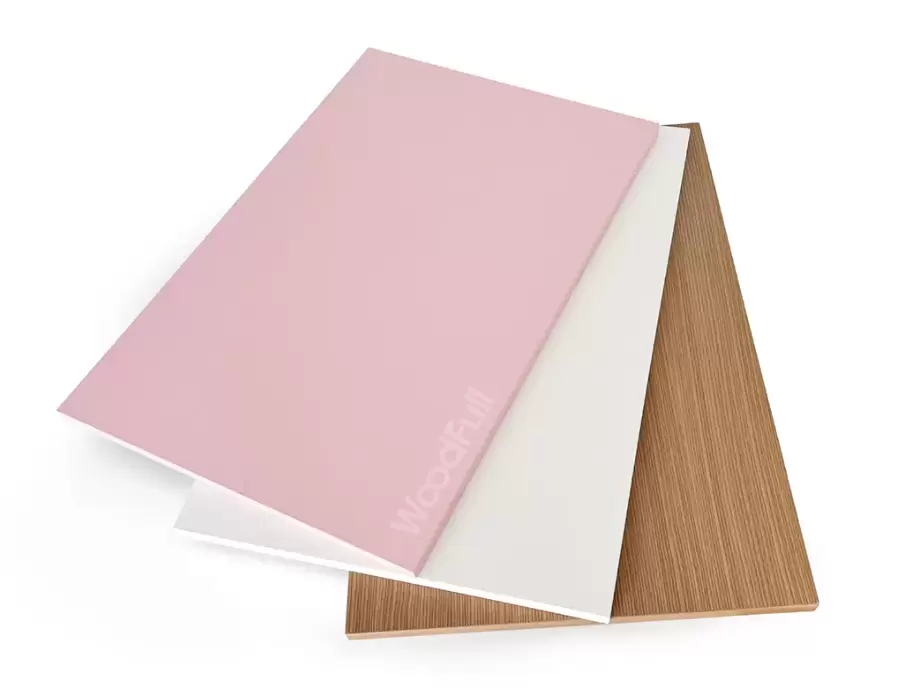
For furniture manufacturers working with wardrobes, cabinets, shelving, tables, doors, wall units, and other case goods, the practical question is not simply whether the board contains oak. It is whether the complete panel structure can maintain dimensional stability, provide reliable screw holding, support repeated machining, and deliver a consistent surface after finishing. Blockboard products generally use solid wood strips arranged edge-to-edge between veneer or surface layers, with the core construction playing a major role in panel stability and fastening performance.
The basic construction of a block furniture board consists of narrow solid-wood strips assembled into a core and combined with face and back layers. This construction differs from MDF, particleboard, and conventional plywood because the central material contains longitudinal solid-wood elements rather than a homogeneous fiber or particle matrix.
For furniture applications, this creates several engineering consequences. Fasteners can interact directly with solid wood fibers in the core, which is useful for hinges, drawer hardware, shelf supports, connecting screws, and other mechanical fittings. At the same time, the face layers help distribute stresses and reduce the dimensional movement that would occur if a thick solid-wood panel were used without engineered stabilization.
The quality of those individual strips therefore becomes a critical manufacturing variable. Variations in strip width, moisture content, grain direction, knots, cracks, or internal defects can produce differences in local stiffness and movement. Current blockboard specifications commonly identify core strip quality, moisture control, bonding, and panel flatness as key quality factors.
For an oak block furniture board, the construction should therefore be evaluated as a system rather than by the oak species alone.
Oak is a dense hardwood with a distinctive grain and strong visual identity, but using oak throughout the entire panel is not always the most efficient engineering solution. Depending on the board design, oak may be used as a decorative face, structural strip material, or part of a multilayer construction.
A lighter wood core can reduce panel weight while the oak surface provides the desired appearance. A denser core can increase local screw-holding capability and resistance to mechanical loading but may increase weight and machining forces.
This distinction becomes important when producing large furniture components. A 2440 × 1220 mm panel used for a wardrobe side, long shelf, table component, or cabinet door can become difficult to handle if density increases significantly. Published blockboard specifications commonly show density ranges around 420–600 kg/m³ depending on core species and construction, illustrating why material selection should be connected to the intended application rather than treated as a simple “harder is better” decision.
For example, a large wardrobe panel may prioritize weight control and dimensional stability, while a table component with concentrated fasteners may require greater local strength. The same oak block furniture board specification does not necessarily suit both applications.
Wood movement begins with moisture exchange. When a wood-based panel enters a new environment, the wood continuously responds to relative humidity and temperature. If the core is manufactured with excessive or inconsistent moisture content, the board may continue to shrink or expand after installation.
This can result in bowing, edge movement, surface telegraphing, veneer separation, or changes in the dimensions of machined components. For furniture manufacturing, these problems are especially visible after CNC cutting because a small dimensional change in the raw panel can become an alignment problem in the finished product.
Export-oriented blockboard specifications commonly control core moisture in approximately the 8–12% range, although the correct target depends on wood species, manufacturing conditions, and destination environment.
중요한 문제는 단순히 목표 수치에 한 번 도달하는 것이 아닙니다. 배치 내, 코어와 표면층 사이의 수분 변화도 중요합니다. 서로 다른 레이어가 상당히 다른 수분 조건으로 프레싱에 들어가면 패널이 평형을 이루면서 내부 응력이 발생할 수 있습니다.
따라서 해외 가구 생산을 위한 참나무 블록 가구판의 경우 습기 조절은 도착지의 기후, 보관 조건, 운송 방법 및 최종 설치 환경과 연계되어야 합니다.
코어 스트립 너비는 주목할 만한 또 다른 매개변수입니다.
더 좁은 스트립은 코어 내에 더 많은 관절을 생성하고 국소적인 움직임을 분산시키는 데 도움이 될 수 있습니다. 더 넓은 스트립은 조립 복잡성과 재료 처리 비용을 줄일 수 있지만 개별 목재 섹션이 더 크면 습도 변화에 따라 더 눈에 띄는 치수 움직임을 생성할 수 있습니다.
일부 가구 등급 블록보드 사양은 약 20~40mm 범위의 코어 스트립을 사용하지만 적절한 너비는 보드 구조 및 용도에 따라 다릅니다.
장식 표면이 얇은 오크 블록 가구 보드의 경우 코어 내의 움직임이나 불균일성이 결과적으로 표면을 통해 전달될 수 있기 때문에 스트립 너비가 특히 중요합니다. 이는 고광택 마감재, 얇은 베니어판, 페인트 칠한 가구 및 작은 표면 불규칙성이라도 시각적으로 명백하게 나타날 수 있는 대형 평면 도어의 경우 특히 문제가 됩니다.
따라서 일관된 스트립 구조는 제조 공차를 제어하지 않고 단순히 공칭 스트립 폭을 지정하는 것보다 더 중요합니다.
보드는 코어 스트립 간, 코어와 크로스 밴드 레이어 간, 표면 레이어와 기판 간 등 여러 인터페이스를 통해 구조적 무결성을 유지해야 합니다.
불충분하거나 일관되지 않은 접착 도포로 인해 국부적인 약점이 발생할 수 있습니다. 반면, 과도한 접착제는 접착력이 자동으로 강화되는 것을 의미하지 않으며 압축 조건, 수분 이동 또는 표면 품질을 방해할 수 있습니다.
블록보드 제조에서는 일반적으로 압축하는 동안 제어된 접착제 도포와 압력 및 온도를 결합합니다. 품질 관리는 일반적으로 결합 강도, 표면 평탄도, 수분 함량 및 내부 무결성에 중점을 둡니다.
반복적으로 적재되거나 기계적으로 조립되는 가구 부품의 경우 가공 영역 주변의 접착 품질이 특히 중요합니다. 패널을 절단하면 내부 구조가 노출되고 라우팅, 드릴링, 홈 가공 또는 가장자리 처리 중에 접착이 불량한 영역이 보일 수 있습니다.
두께는 전체 가구 프로그램에 걸쳐 하나의 두께를 사용하기보다는 보드의 구조적 역할에 따라 결정되어야 합니다.
18mm 패널은 캐비닛 본체, 선반, 도어 및 일반 가구 구성 요소에 널리 사용되며, 두꺼운 보드는 긴 스팬, 무거운 선반, 테이블 구조 및 추가 가공 깊이가 필요한 구성 요소에 적합할 수 있습니다. 상업용 블록보드 사양에는 일반적으로 15mm, 18mm, 25mm 및 기타 맞춤형 두께가 포함됩니다.
두께와 폭 사이의 관계는 긴 선반의 경우 특히 중요합니다. 두께가 증가하면 굽힘 강성이 크게 증가하는 반면, 밀도가 높은 재료를 선택하면 부품의 기하학적 구조를 해결하지 않고도 무게가 추가될 수 있습니다.
CNC 가구 생산의 경우 두께 공차도 중요합니다. 공칭 두께가 18mm이지만 실제 패널이 시트 전체에 걸쳐 크게 달라지는 경우 홈 깊이, 커넥터 위치 지정, 가장자리 밴딩 및 조립 공차가 모두 영향을 받을 수 있습니다.
오크 블록 가구 보드는 궁극적으로 천연 베니어판, 멜라민, HPL, 페인트, UV 코팅 또는 기타 장식 마감재를 받을 수 있습니다. 따라서 하지면은 선택한 마감 공정에 적합한 표면 상태를 제공해야 합니다.
처음에는 원시 패널이 괜찮아 보일지라도 코팅 후에 고르지 않은 샌딩, 코어 움직임, 접착 결함 또는 표면층 두께 변화가 나타날 수 있습니다.
예를 들어, 페인트칠된 캐비닛 도어에는 불투명 라미네이트로 덮인 내부 선반과 다른 수준의 표면 일관성이 필요합니다. 따라서 가구 프로그램은 모든 구성 요소에 하나의 외관 표준을 적용하기보다는 최종 마감에 따라 표면 등급을 지정해야 합니다.
이 소재는 천연 목재 특성, 관리 가능한 무게, 나사 고정 성능, 기계 가공 기능 및 패널 안정성의 조합이 필요한 응용 분야에 특히 적합합니다.
옷장 본체는 경첩과 커넥터 주변의 견고한 목재 코어 구조의 이점을 누릴 수 있습니다. 긴 선반은 공학적 패널 구조의 견고함을 활용할 수 있습니다. 테이블 구성 요소는 더 큰 굽힘 저항이 필요한 경우 더 두꺼운 구성을 사용할 수 있습니다. 장식용 문은 참나무 외관과 보다 잘 제어된 엔지니어링 기판을 결합할 수 있습니다.
정확한 구조는 하중, 범위, 습도, 가공 패턴, 표면 마감 및 고정 요구 사항에 맞춰야 합니다.
Shandong Xingang Group Co., Ltd.는 환경 지향적인 목재 재료 기술에 중점을 두고 장식 보드, 초박밀도 보드 및 생체 모방 해양 합판을 포함한 응용 분야를 위한 Xingang 생체 모방 접착제를 개발했습니다.
The company's stated adhesive technology is designed around zero formaldehyde, zero benzene, and zero harmful substances, with the broader objective of developing healthier and more sustainable wood-based materials. For furniture applications, this approach can be incorporated into the material-selection discussion alongside core construction, bonding performance, moisture control, and surface requirements.
For an oak block furniture board, the adhesive system should not be evaluated independently from the panel. Bond-line performance, emission requirements, processing conditions, and long-term dimensional behavior need to be considered together.
A reliable oak block furniture board specification should go beyond “oak board” and define the parameters that actually determine manufacturing performance. These can include panel thickness and tolerance, core species, strip dimensions, moisture range, face and back construction, adhesive system, bonding requirements, surface grade, density, flatness, emission requirements, and applicable certification.
This approach reduces the risk of receiving visually similar boards with materially different processing behavior.
For furniture manufacturers, the value of an oak block furniture board is ultimately determined by what happens after the panel leaves the factory: whether it remains stable during transportation, machines consistently, holds hardware securely, accepts its intended finish, and maintains dimensional performance in the finished furniture. Controlling the core structure, moisture, bonding system, and surface construction provides a more reliable path to consistent furniture production.


